
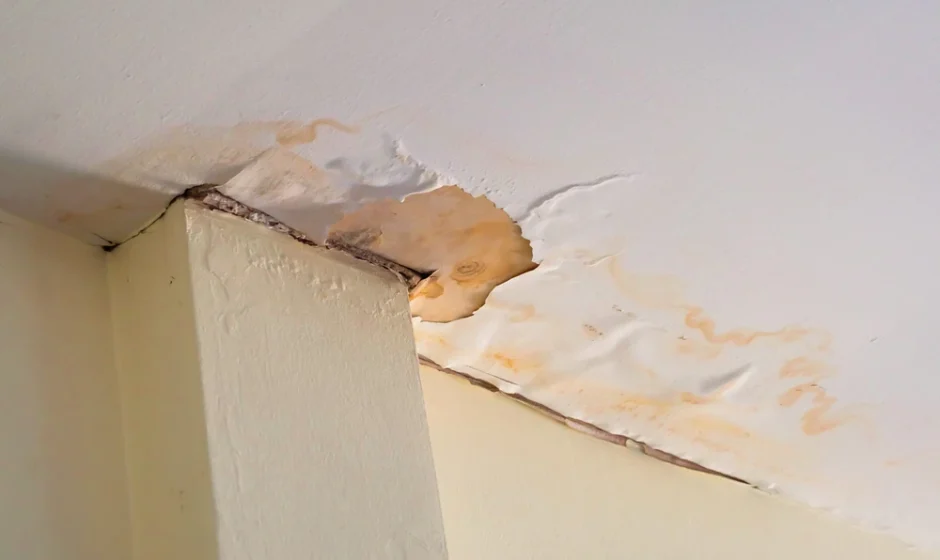

A brown ring shows up on the bedroom ceiling the morning after a spring thunderstorm. You climb into the attic, shine a flashlight straight above it, and find dry decking and dry nails. It feels like the roof is playing a trick on you, but this is one of the most common puzzles in central Oklahoma homes, and it almost always has a logical answer.
Roofers who take leak calls at all hours run into this mismatch constantly. The crew behind antlersconstruction.com works from an office on SW 38th Street and covers siding and gutters as well as roofs, reaching Moore, Norman and the rest of the metro. As an Oklahoma City roofing company started by someone who first worked on rooftops at fifteen, it has seen plenty of proof that the stain on the drywall is usually the last chapter of the story rather than the first.
Water Almost Never Falls Where It Gets In
Rain that slips past a shingle does not drop straight down. It lands on the roof deck and runs downhill along the underside of the sheathing, then catches a rafter or truss and rides along it until a nail, a seam or a low point sends it falling. From there it can soak into insulation, spread sideways across the top of the drywall and only then bloom into a visible stain. A gap near the ridge can easily produce a mark several feet lower and one room over.
The stain itself carries clues worth reading. Several concentric rings usually mean the spot has gotten wet and dried out more than once, which points to a leak that has been active over many storms. A dark, soft center with a fresh edge suggests recent water and an opening that may still be getting worse. A stain that sags or feels spongy means the drywall is holding water and should be dealt with quickly, before the panel gives way.
Some Wet Spots Never Came Through the Shingles
Before blaming the roof, it helps to rule out the impostors, and Oklahoma houses have a few common ones.
Many homes in the metro have their air handler sitting in the attic. In summer the coil produces gallons of condensate a day, and a clogged drain line or a rusted secondary pan can leak onto the ceiling below. The giveaway is timing. If the stain grows during a dry, hot week with the AC running hard, the roof is probably innocent.
Condensation is the other frequent culprit, especially in the cold months. Bathroom fans that dump humid air into the attic instead of outside, or an attic short on ventilation, can leave moisture on the underside of the deck and frost on exposed nail tips. When that frost melts on a sunny afternoon it drips like a leak, often in many small spots instead of one. The University of Nebraska Extension guide to identifying moisture and mold sources in houses walks through these indoor sources in a useful checklist form.
Plumbing vents and supply lines running through the attic round out the list. A loose fitting or a cracked pipe can produce a stain that looks exactly like a roof problem.
Following the Trail Upward
If the evidence points at the roof, the attic is where the real tracing happens. It is safest to go during daylight, step only on joists or boards laid across them, and bring a strong flashlight. A sensible order looks like this.
- Start at the ceiling stain and find that same spot from above, then look uphill along the rafters rather than straight overhead.
- Look for dark trails or tide lines on the wood, which show the path water has been taking.
- Check the insulation for compressed, matted or discolored patches.
- Look for rusty nail tips poking through the deck, since rust often marks a spot that stays damp.
- Turn the flashlight off for a moment and watch for pinpoints of daylight coming through the decking.
Going up during or right after a rain makes the hunt much easier, since an active drip leaves fresh, shiny wood that is hard to miss.
Where Oklahoma Roofs Usually Let Water In
Shingles get the blame for most leaks, but the field of a roof is rarely where water starts. The weak points tend to be the places where the roof surface gets interrupted.
Pipe boots
The rubber collars around plumbing vents bake in Oklahoma summers and eventually crack and pull away from the pipe. They are small, cheap parts, yet they cause an outsized share of the leaks roofers trace.
Flashing along walls and chimneys
Wherever a roof meets a vertical surface, metal flashing has to carry water away. Step flashing that was never installed, or old flashing held in place mostly by caulk, tends to fail first along chimneys, dormers and second story walls.
Valleys
Two roof planes funnel water into one channel, so valleys handle far more runoff than any other area. Debris buildup, worn shingles and nails placed too close to the center of a valley all lead to trouble here.
Wind lifted shingles
Strong straight line winds can break the adhesive seal under a shingle tab without tearing the shingle off. The roof looks complete from the ground, but rain blown sideways can slide under the loose tab and reach the nails beneath it.
Exposed and popped nails
Nails can back out over years of heating and cooling, pushing up the shingle above them and creating a tiny opening. Exposed nail heads near ridge caps and vents are another common entry point when they lose their sealant.
Storms That Rain Sideways
Central Oklahoma storms do not always drop water politely from above. Driving wind can push rain under shingles, through ridge and box vents, and behind siding near the roofline. That is why some homes leak only during storms coming from one direction and stay perfectly dry through ordinary rain. Keeping a note of the wind direction and storm strength each time a stain grows can save a roofer hours of searching.
Signs of a Repair Worth Paying For
A good repair visit traces the water back to its source rather than smearing sealant around the first suspicious spot. Expect the roofer to inspect both the attic and the roof surface, explain which entry point lines up with the stain, and share photos of what was found. When the source is not obvious, a careful contractor may run a controlled hose test, wetting small sections of the roof from the lowest point upward until the drip appears inside.
Oklahoma requires roofing contractors to register with the Construction Industries Board under the Roofing Contractor Registration Act, so asking for a registration number before any work starts is a simple check. Once the leak is fixed, let the ceiling dry fully before painting, and replace any insulation that stayed wet. Covering a stain too early can hide a second leak that is still quietly feeding it, and the whole puzzle starts again with the next storm.