
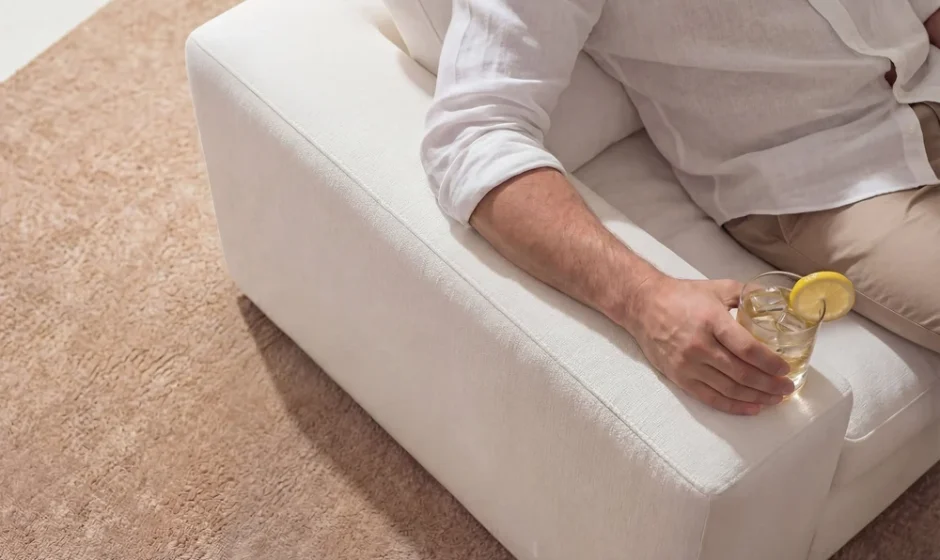

Light-coloured fabric sofas show yellowing sooner than darker pieces because pale dyes reveal every change far more clearly than deeper shades ever would. Sunlight breaks down fibres from the surface, sweat and body oils build up gradually within the weave, the wrong cleaning product can trigger discolouration almost immediately, and damp air speeds up staining that would otherwise take much longer to appear. Understanding these causes helps explain why Upholstery Cleaning Brisbane service approaches light fabric with particular care compared with darker upholstery.
Sunlight fades white fabric
Sunlight fades white fabric through a gradual chemical process rather than a single visible event. Ultraviolet rays break down the molecular bonds holding dye to each fibre, and pale fabric shows this breakdown far sooner than dark fabric because there is so little colour depth to mask the early stages of change.
- UV exposure begins altering fibre structure within the first few weeks near a bright window.
- Repeated daily exposure compounds the damage, since fibres never fully recover between sessions of direct light.
- Pale dyes reach a visible tipping point much faster than darker dyes with more pigment to lose before any change becomes noticeable.
Sweat and oils build up
Light fabric shows this change earlier than dark fabric simply because there is no existing colour to disguise the shift.
- Contact point accumulation – Armrests, headrests, and seat cushions absorb skin oils continuously through everyday use, building a residue layer wherever contact happens most often.
- Oxidation over time – Natural body oils oxidise once exposed to air, and that chemical process produces the yellow tint commonly seen in ageing fabric.
Wrong cleaner causes yellowing
Wrong cleaner causes yellowing when a product unsuited to the fabric type reacts chemically with the fibres rather than simply lifting dirt away. Bleach-based products react with certain synthetic fibres and produce a yellow tint almost immediately, while products left without proper rinsing continue reacting with fabric long after the initial application.
Professional assessment before treatment prevents this outcome entirely, since matching the product to the fabric type removes the guesswork that leads to chemical yellowing.
Damp air stains fabric
Damp air stains fabric because humidity interacts with residue already present within the fibres, accelerating a colour change that dry conditions would otherwise slow considerably. Moisture trapped inside cushions creates an environment where existing oils and airborne particles react more readily with the fabric itself. As a consequence, dampness tends to stay within fabric for longer periods of time in poorly ventilated rooms, making it difficult for it to evaporate quickly. Couches located near windows prone to condensation or in high-humidity rooms often yellow sooner than those kept in drier conditions.
Typically, yellowing does not occur from one single cause, but rather as a result of a combination of sunlight exposure, natural oils, unsuitable cleaning products, and ambient humidity. Knowing what factors contribute to a particular couch’s condition helps guide the right care approach, since prevention and proper treatment both depend on understanding how the problem began.